
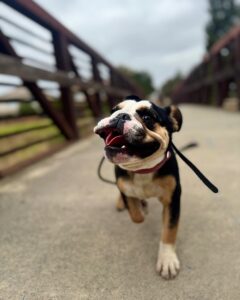
You clip on your dog’s leash, open the front door, and look forward to a relaxing walk around your Austin neighborhood. But as soon as you step outside, your dog rushes ahead.
The leash tightens, your arm stretches forward, and your peaceful walk becomes a struggle to keep up.
Leash pulling is a common challenge, especially when dogs become excited by new smells, people, and unfamiliar surroundings.
To stop a dog from pulling on a leash, reward relaxed leash behavior, pause forward movement when the leash becomes tight, and gradually practice around distractions. Consistency helps your dog learn that walking without pulling allows the walk to continue.
The goal isn’t to force your dog into a perfect heel position throughout every outing. It’s to teach comfortable, controlled walking while allowing appropriate opportunities to explore.
Here are seven practical steps to build better leash manners.
Why Do Dogs Pull on the Leash?
Dogs usually pull because moving forward helps them reach something interesting.
Common reasons include:
- Excitement: Your dog wants to investigate smells, people, or other animals.
- Learned behavior: Pulling has previously helped your dog reach a destination.
- Limited training: Your dog hasn’t learned how to walk comfortably within the leash’s range.
- Overstimulation: Busy environments make it difficult to focus on familiar cues.
- Fear or frustration: Some dogs pull toward or away from situations that make them uncomfortable.
For example, if your dog pulls toward a tree and you follow, sniffing the tree becomes a reward for pulling.
Over time, this pattern can become a habit.
Understanding why your dog pulls helps you choose an appropriate training approach.
What Is Loose-Leash Walking?
Loose-leash walking means your dog moves with you without creating constant tension on the leash.
Your dog may walk beside you or slightly ahead, provided you maintain control and the leash stays relaxed.
This differs from formal heel training.
| Skill | Meaning | Common Use |
| Loose-leash walking | Walking without sustained leash tension | Everyday neighborhood walks |
| Heel | Maintaining a specific position near the handler | Structured obedience exercises |
Both skills are useful, but most everyday walks don’t require continuous formal heeling.
The American Kennel Club’s guide to stopping leash pulling emphasizes rewarding appropriate walking and preventing pulling from repeatedly earning forward movement.
How to Stop a Dog From Pulling on a Leash: 7 Training Steps
Start somewhere quiet where your dog can focus.
Keep sessions short and increase difficulty gradually.
1. Choose Comfortable Walking Equipment
Before training, check that your dog’s equipment fits properly.
For many dogs, a well-fitted harness and standard fixed-length leash provide a practical starting point.
Some front-clip harnesses can help owners manage pulling, but equipment alone doesn’t teach leash manners.
Choose gear that:
- Fits securely without rubbing
- Allows comfortable movement
- Matches your dog’s size and handling needs
- Doesn’t cause pain or excessive pressure
- Provides appropriate control
Retractable leashes can make early training more difficult because the leash length changes and tension may be present even when your dog isn’t pulling hard.
If your dog coughs, struggles to breathe, or experiences discomfort when pulling, consult your veterinarian about suitable equipment.
2. Start in a Quiet Environment
Begin in your home, backyard, or another safe area with minimal distractions.
Have small, appropriate treats ready.
Practice this exercise:
- Stand calmly with your dog on a leash.
- Reward them when the leash is relaxed.
- Take one or two steps forward.
- Reward your dog for moving with you without pulling.
- Repeat while gradually increasing the number of steps.
At first, you may only practice for a few minutes.
That’s enough.
The goal is to help your dog associate walking near you with positive outcomes.
3. Stop When the Leash Becomes Tight
One important principle of loose-leash training is that pulling shouldn’t consistently move your dog toward something they want.
When the leash becomes tight:
- Stop walking when it’s safe.
- Keep your movements calm.
- Avoid jerking the leash.
- Wait for your dog to release the tension.
- Reward the relaxed leash.
- Continue walking.
You may need to stop frequently during early sessions.
If your dog remains focused on a distraction, encourage them to move toward you or create more distance.
Don’t drag them backward.
Training tip: Combine stopping with rewards for appropriate walking. Simply standing still without teaching an alternative may frustrate some dogs.
4. Reward Your Dog for Walking Near You
Don’t wait until your dog pulls before providing feedback.
Reward the behavior you want to see.
Useful rewards include:
- Small treats
- Verbal praise
- Continued forward movement
- Access to an appropriate sniffing area
- Brief play or attention
Initially, reward frequently.
For example, you might offer a treat after several successful steps.
As your dog becomes more consistent, gradually increase the distance between rewards.
The goal is to make walking on a relaxed leash worthwhile.
5. Teach Your Dog to Check In With You
A dog that occasionally looks toward their handler may be easier to guide around distractions.
Start with a simple attention exercise.
Say your dog’s name once.
When they look toward you, mark the behavior with “Yes” or your usual reward marker, then offer a treat.
Repeat until your dog responds consistently.
Next, practice while walking.
Reward brief glances toward you, whether your dog responds to their name or checks in voluntarily.
Avoid requiring continuous eye contact.
Your dog should still have opportunities to observe and explore their surroundings safely.
6. Practice Gentle Direction Changes
Changing direction can encourage your dog to pay attention to your movement.
Begin in an open, quiet area.
Walk forward with your dog.
Before the leash becomes tight, calmly turn in another direction.
Encourage your dog to follow and reward them when they catch up without pulling.
Practice several easy turns.
Avoid sudden movements that jerk your dog’s neck or pull them off balance.
This exercise teaches your dog to notice changes in direction rather than rushing forward independently.
7. Gradually Introduce Distractions
Once your dog walks comfortably in a quiet area, practice in more challenging environments.
A possible progression is:
- Living room
- Backyard
- Quiet residential sidewalk
- Familiar neighborhood route
- Area with mild distractions
- Busier surroundings when your dog is ready
Increase difficulty gradually.
If your dog begins pulling constantly, return to an easier environment or increase your distance from distractions.
A short, successful training walk is often more useful than a long outing filled with repeated pulling.
How to Stop Your Dog From Pulling Toward Other Dogs
Some dogs pull hardest when they see another dog.
They may be excited, curious, frustrated, or frightened.
The underlying reason matters because not all pulling is an ordinary leash-manners issue.
If your dog remains relaxed when another dog appears:
- Notice the approaching dog early.
- Maintain enough distance for your dog to stay comfortable.
- Reward attention toward you.
- Continue walking with a relaxed leash.
- Increase distance if your dog becomes overwhelmed.
Avoid forcing greetings.
Not every dog needs to meet another dog during a walk.
If your dog repeatedly barks, lunges, freezes, or shows signs of fear, seek guidance from a qualified professional experienced in leash reactivity.
How to Stop Pulling Toward Interesting Smells
Sniffing is an important part of a dog’s outdoor experience.
Rather than preventing all exploration, use appropriate sniffing opportunities as rewards.
For example, if your dog wants to investigate a tree:
- Approach while rewarding a loose leash.
- Stop if your dog pulls.
- Wait for the leash to relax.
- Continue toward the tree.
- Allow a brief sniffing break when your dog reaches it without pulling.
This teaches your dog that appropriate walking can lead to enjoyable activities.
Keep sniffing opportunities safe and prevent access to potentially harmful objects.
Harness vs. Collar: Which Is Better for a Dog That Pulls?
There’s no single piece of equipment that works best for every dog.
A properly fitted harness may help distribute pressure across the body rather than concentrating it on the neck.
However, some harness designs can restrict shoulder movement or cause rubbing if fitted incorrectly.
A collar may be appropriate for certain dogs, but strong pulling against the neck can create safety concerns.
Equipment should never replace training.
The VCA Animal Hospitals guide to controlling leash pulling discusses equipment selection, reward-based exercises, and situations requiring individualized professional help.
If you’re unsure which equipment is suitable, consult your veterinarian or a qualified dog-training professional.
Common Leash-Training Mistakes to Avoid
Continuing to Walk While Your Dog Pulls
If pulling repeatedly gets your dog closer to something interesting, the habit may continue.
Reward a relaxed leash before allowing forward movement.
Pulling Back or Jerking the Leash
Sudden leash corrections can cause discomfort or injury.
Encourage your dog to move with you and reward appropriate behavior instead.
Starting Somewhere Too Busy
A crowded sidewalk may be too challenging for a dog learning basic leash manners.
Begin somewhere quiet and gradually introduce distractions.
Expecting Perfect Heeling
Everyday walks don’t require your dog to remain directly beside you at all times.
Focus on maintaining a relaxed leash and responding to your guidance.
Training Inconsistently
If one person allows pulling while another stops whenever the leash tightens, progress may take longer.
Ask everyone who walks your dog to follow similar expectations.
How Long Does It Take to Stop Leash Pulling?
There’s no guaranteed timeline.
Some dogs begin improving after consistent practice, while others need more time to change an established habit.
Progress depends on:
- Age and previous training
- Excitement levels
- Frequency of practice
- Consistency among handlers
- Environmental distractions
- Motivation and reward selection
Early signs of improvement may include more frequent check-ins, less leash tension, and quicker responses when you change direction.
Continue practicing in different environments as your dog’s skills develop.
Leash Walking Tips for Austin Dog Owners
Austin offers different walking environments, from residential sidewalks to busier areas with pedestrians, bicycles, and other dogs.
A dog that walks calmly near home may struggle in unfamiliar surroundings.
Start with manageable routes and gradually introduce new locations.
Plan Around Austin’s Heat
During warmer months, schedule walks during cooler periods when possible.
Check pavement conditions before heading outside.
Provide fresh water, take breaks, and avoid strenuous activity during extreme heat.
The American Veterinary Medical Association’s warm-weather pet safety guidance recommends avoiding hot surfaces and adjusting outdoor activity during high temperatures.
If your dog shows excessive panting, weakness, unsteadiness, or collapse, seek emergency veterinary care.
Keep Training Walks Short
You don’t need to complete a long neighborhood route during every training session.
Start with a manageable distance and increase it as your dog improves.
Allow Appropriate Exploration
Give your dog opportunities to sniff and investigate safe areas.
A walk can provide mental stimulation as well as physical activity.
Use these opportunities to reinforce relaxed leash behavior.
When Should You Consider Professional Leash Training?
Professional guidance may be useful if:
- Your dog pulls throughout most walks.
- You struggle to maintain physical control.
- Pulling creates a safety concern.
- Your dog ignores familiar cues outdoors.
- Your dog becomes overwhelmed by distractions.
- Pulling is accompanied by barking, lunging, or fear.
If your dog’s behavior changes suddenly or pulling appears related to pain, consult your veterinarian.
Dog Training Options in Austin, TX
At Off Leash K9 Training Austin and Central Texas, our published obedience programs include leash-walking skills.
Our Basic Obedience Training lists Heel and loose-leash walking as part of its curriculum.
Additional obedience programs also include walking-related commands and training around distractions.
You can review our Austin training programs and pricing to learn more about available options.
Before selecting a program, discuss your dog’s age, behavior, and specific training goals with the team.
Frequently Asked Questions
Why does my dog pull so hard on walks?
Dogs often pull because they’re excited, want to investigate something, or have learned that pulling helps them move forward. Fear and frustration can also contribute.
What’s the best way to stop a dog from pulling on a leash?
Start in a quiet area, reward loose-leash walking, pause when the leash tightens, and gradually practice around distractions.
Should I stop walking every time my dog pulls?
Stopping can help teach that pulling doesn’t move the walk forward. Also reward appropriate behavior and make the exercise easier if your dog repeatedly struggles.
Can older dogs learn to stop pulling?
Yes. Adult dogs can learn new walking habits, although established pulling behavior may require additional practice.
Is a harness better than a collar for pulling?
A properly fitted harness may be more comfortable for some dogs, but equipment alone doesn’t teach loose-leash walking. Choose based on your dog’s needs.
How do I stop pulling toward other dogs?
Practice at a comfortable distance and reward calm attention. Avoid forced greetings. Seek professional guidance if your dog lunges or appears frightened.
Will my dog eventually stop pulling on their own?
Some dogs become less excitable with age, but pulling may remain a learned habit. Consistent training is more reliable than waiting for maturity alone.
Enjoy Better Walks With Consistent Leash Training
Learning how to stop a dog from pulling on a leash takes patience, clear expectations, and regular practice.
Start in a quiet environment, reward relaxed leash behavior, and prevent pulling by consistently moving the walk forward.
Gradually introduce distractions and give your dog appropriate opportunities to explore.
If you’re an Austin dog owner looking for help with leash manners or basic obedience, contact Off Leash K9 Training Austin, TX to discuss your dog’s needs and available training options.
With consistent practice, you can help your dog develop calmer, more comfortable walking habits.
