
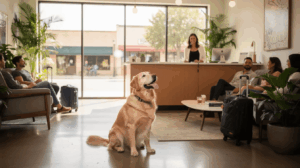
Austin offers many accommodations for travelers with dogs, and finding suitable dog-friendly hotels in Austin comes down to comparing each property’s rules, location, and amenities. The real challenge is narrowing down which property fits your needs and making sure your four-legged companion is ready for the experience.
This guide covers Austin pet-friendly hotels worth considering, what to verify before booking, the obedience skills that can make hotel stays smoother, and how to help your dog settle into an unfamiliar room. Whether you are planning a weekend visit or an extended vacation, the goal is straightforward: a comfortable, manageable stay for both you and your dog.
Austin offers numerous pet-friendly hotels with different policies, amenities, and fee structures. Location can also matter if you want convenient access to parks, trails, or dog-friendly dining. Policies change, and not every hotel will suit every dog.
Here is what you will gain from this article:
- A helpful list of dog-friendly hotels across Austin neighborhoods
- A practical checklist of questions to ask before booking
- Training and obedience skills that can help your dog behave appropriately in hotel settings
- A step-by-step approach to helping your dog settle into a new room
- Awareness of common travel concerns and how to manage them
Key Takeaways
- Austin has a strong selection of pet-friendly hotels, including downtown properties and accommodations in other neighborhoods.
- Hotel pet policies vary significantly. Fees, weight restrictions, breed rules, and policies about leaving dogs unattended can differ by property.
- Always confirm current policies directly with each hotel before booking because rules can change.
- Basic obedience skills, including leash manners, a reliable place command, crate comfort when appropriate, and calm behavior around noise, can make hotel stays easier to manage.
- Preparing your dog before the trip matters as much as choosing the right hotel.
Dog-Friendly Hotels in Austin Worth Considering
Austin, TX, has dog-friendly accommodations across several neighborhoods, each offering something different depending on your priorities. Some travelers want to stay close to Sixth Street and downtown attractions. Others prefer areas with easier access to parks, trails, or quieter surroundings.
The following hotels publish pet-friendly policies. Keep in mind that policies may include restrictions on weight, breed, number of dogs, room availability, or permitted areas. Always verify the current policy directly with the property before booking.
Downtown Austin Options
Downtown Austin puts you close to Lady Bird Lake, Rainey Street, and many restaurants and attractions. Pet policies vary considerably among downtown hotels, including properties with weight limits and others without them.
The Driskill Hotel is a historic downtown hotel that currently allows dogs weighing up to 50 pounds individually, or two dogs weighing no more than 75 pounds combined. A $100 one-time nonrefundable pet fee applies. Hyatt lists a plush dog bed and food dishes among its pet amenities. Confirm current fees, restrictions, and rules about leaving dogs unattended directly with the hotel before booking.
Hotel Van Zandt near Rainey Street currently welcomes up to two dogs per room with no weight, height, or breed restrictions. A $100 pet fee applies. The hotel’s current dog policy also requires dogs to remain leashed in public spaces and restricts dogs from certain areas of the property.
The LINE Austin sits adjacent to Lady Bird Lake and currently welcomes pets without a pet fee or weight limit. The hotel lists courtesy bags, water bowls, and treats among the pet items available through its front desk.
Aloft Austin Downtown currently allows one pet weighing up to 40 pounds and charges a $50 nonrefundable pet fee per stay. Its pet program includes a bed, bowl, treats, and toys. Travelers with larger dogs should contact the hotel directly to confirm whether an exception is available.
Canopy by Hilton Austin Downtown is a pet-friendly hotel on West Sixth Street in downtown Austin. Hilton currently lists pet-friendly rooms and a maximum pet weight of 75 pounds. Confirm current pet fees, amenities, and other restrictions directly with the hotel.
Other Austin Neighborhoods
Properties outside the central downtown core can offer different surroundings and convenient access to neighborhood parks, dining, and walking areas.
Origin Hotel Austin in the Mueller neighborhood welcomes dogs subject to its current pet limits and fees. Mueller Lake Park is nearby, providing another option for outdoor walks. Confirm the hotel’s current weight limits, number-of-pet rules, and fees before booking.
East Austin Hotel on East Sixth Street welcomes dogs and publishes a combined pet weight limit. Because hotel policies and fees can change, confirm the current charge and any restrictions directly before booking. The property also limits dog access to certain areas.
Hotel Ella is a pet-friendly boutique hotel in Central Austin near the University of Texas campus. Confirm current restrictions, pet fees, room availability, and amenities directly with the hotel before making a reservation.
Parks and trails near your hotel can provide useful exercise and bathroom-break options. Austin has designated off-leash areas at locations including Zilker Metropolitan Park, Barking Springs, Auditorium Shores, and Onion Creek Greenbelt. Dogs must remain leashed in city parks outside designated off-leash areas.
The Butler Hike-and-Bike Trail around Lady Bird Lake is another popular walking option. Before allowing your dog to enter Austin waterways, check current City of Austin water-quality and harmful-algae guidance.
What to Check Before Booking a Dog-Friendly Hotel
Hotel policies regarding pets can vary significantly in Austin. What works at one property may not apply at another, even within the same hotel brand. Confirming the following details before booking can help prevent surprises at check-in.
Pet fees and deposits. Ask whether the hotel charges a nonrefundable pet fee, a refundable deposit, or both. Some hotels charge per stay, while others use a nightly structure. Some properties charge no pet fee. Clarify whether the fee is per room or per pet and whether other hotel charges apply separately.
Weight and number limits. Pet limits vary considerably. Some Austin hotels set individual or combined weight limits, while others publish no weight restrictions. Always confirm the maximum number of dogs allowed in the room and whether your dog’s weight falls within the hotel’s current policy.
Breed restrictions. Ask each hotel whether any breed restrictions apply, especially if the policy is not clearly stated online. If you have questions about your dog’s eligibility, confirm the policy directly with the property before booking.
Leaving your dog unattended. Ask whether dogs may be left alone in the room and whether crating is required when they are unattended. Policies differ by property, so this is especially important if you plan to visit restaurants or attractions without your dog.
Pet-friendly areas. Ask which spaces your dog can access. Rules for lobbies, restaurant patios, pool areas, and other shared spaces can vary. Find out whether there is a designated relief area on the property or whether you will need to walk elsewhere.
Documentation. Ask the hotel whether it requires any pet-related documentation before arrival, and keep your dog’s identification and relevant vaccination information available when traveling.
Room location. When available, consider requesting a room away from elevators or heavy foot traffic if your dog reacts to hallway noise. A room with enough space for your dog’s bed, mat, or crate can also make settling in easier.
Hotel Manners Your Dog Should Know
A welcoming pet policy is only part of a successful hotel stay. Practicing basic obedience training before traveling can make it easier to manage your dog around unfamiliar people, sounds, and surroundings.
Essential Leash Manners and Public Behavior
Plan to keep your dog leashed in hotel entrances, lobbies, hallways, elevators, parking areas, and other shared spaces unless the property clearly states otherwise. Calm loose-leash walking can make it easier to navigate these areas without crowding or disrupting other guests.
Practice walking through doorways, waiting at thresholds, and riding elevators before your trip. Work on calm responses when passing strangers or other dogs in narrow spaces.
Parking areas also require careful handling. Keep your dog secured on a leash from the car to the hotel, manage excitement during transitions, and avoid allowing your four-legged companion to approach unfamiliar people or dogs without permission.
Noise Control and Calm Behavior
Hotels are full of unfamiliar sounds, including doors closing in hallways, air-conditioning units cycling, housekeeping carts, elevators, and voices from neighboring rooms. These triggers can lead some dogs to bark, whine, or become restless.
Teaching and reinforcing a quiet or settle cue can give you another way to redirect your dog. Start by building a consistent training schedule at home and gradually expose your dog to different everyday sounds while reinforcing calm behavior.
Managing excitement around unfamiliar people and dogs is equally important. Use familiar obedience cues and appropriate distance when your dog becomes overly excited or distracted.
Place Command and Boundaries
The place command can be particularly useful during hotel stays. It teaches your dog to go to a designated location, such as a dog bed or mat, and remain there until released.
Use the place command when someone knocks, while you are getting ready, or when you want your dog to settle during downtime. A familiar resting location can provide clearer boundaries in an unfamiliar room.
Crate training can also provide a familiar resting space during travel, particularly for dogs that are already comfortable using a crate. If a hotel permits unattended dogs, confirm whether it requires crating before leaving your dog alone.
Helping Your Dog Settle Into a Hotel
New environments can overstimulate or unsettle even dogs with previous training. A thoughtful approach during the first few hours can make the transition easier.
Start with a walk and bathroom break. Before settling into the room, give your dog an appropriate walk and an opportunity to relieve themselves. Allow some time to become familiar with the immediate surroundings without overwhelming them.
Set up a home base. Before giving your dog more freedom in the room, arrange familiar items such as their bed, favorite toy, food and water bowls, or crate. Position the resting area away from the door when possible to reduce reactions to hallway activity.
Maintain your routine. Keep meals, bathroom breaks, walks, and bedtime as close to your normal routine as practical. Familiar patterns can make a new environment easier for your dog to understand.
Manage absences carefully. Only leave your dog unattended if the hotel’s policy permits it and your dog already handles being alone appropriately. Follow any hotel requirements regarding crates or other containment, and use the room’s “Do Not Disturb” option when appropriate so housekeeping does not unexpectedly enter.
Use white noise. A fan or white-noise app can help mask unfamiliar hallway or street sounds for dogs that settle more easily with consistent background noise.
Prioritize appropriate exercise. Regular walks, training exercises, and other suitable enrichment can help some dogs settle more comfortably during travel. Use only designated off-leash areas and check current City of Austin water-quality guidance before allowing your dog into local waterways.
Clean up promptly. Accidents can happen in an unfamiliar environment. Address them promptly and notify hotel staff if assistance or specific cleanup procedures are required.
Final Thoughts
Finding the right dog-friendly hotel in Austin is the first step. Preparing your dog for the environment can make the experience easier for both of you. Austin offers a combination of pet-friendly accommodations, parks, trails, and dog-friendly outdoor spaces, but each property and public space has its own rules.
Obedience skills such as loose-leash walking, a reliable place command, calm behavior around unfamiliar people, and crate comfort when appropriate can all be useful during hotel stays. Continue practicing these behaviors before and throughout the trip rather than expecting a new environment to automatically produce reliable behavior.
Before booking, confirm every important detail directly with your chosen property. If your dog needs additional work on obedience or travel-related manners, explore training options that can help build useful skills for new environments.
FAQ
Do dog-friendly hotels in Austin charge pet fees?
Policies vary. Some Austin hotels charge no pet fee, while others charge per stay, per night, or per pet. Always confirm the current amount and fee structure directly with the hotel before booking.
Can I leave my dog alone in an Austin hotel room?
It depends on the property. Ask the hotel whether unattended pets are permitted and whether crating or other conditions apply. Confirm the rule before booking if you expect to visit restaurants or attractions without your dog.
Do Austin hotels have breed restrictions for dogs?
Policies vary by hotel. Some properties publish weight or number-of-pet limits, while others may have different restrictions. Contact each hotel directly to confirm whether your dog’s breed, size, and number of pets meet its current policy.
How far in advance should I notify a hotel that I am bringing a dog?
Mention your dog when booking so the property can confirm pet-friendly room availability, applicable fees, restrictions, and any available amenities. Reconfirming the policy before arrival can also help you catch any changes.
What training can help before staying at a hotel?
Helpful skills include loose-leash walking, a place or settle command, calm behavior around unfamiliar people and dogs, and crate comfort if you plan to use a crate during the stay. Dogs that struggle significantly with reactivity, separation-related behavior, or noise sensitivity may benefit from additional preparation before traveling.
