

Bringing a new puppy home is exciting, but the first few weeks can feel overwhelming. Between potty accidents, chewing, unexpected bursts of energy, and interrupted sleep, it can be difficult to know what your puppy needs and when.
One minute, your puppy is playing happily. The next, they’re biting your shoelaces or having an accident indoors.
A predictable routine can make these challenges easier to manage.
A good puppy training schedule includes frequent potty breaks, consistent mealtimes, short obedience lessons, supervised play, safe socialization, and plenty of rest. The goal isn’t to follow a rigid timetable but to create habits that support your puppy’s development.
For puppy owners in Austin, TX, establishing a routine early can make house training and everyday obedience more manageable.
This guide includes a sample daily schedule, age-based training priorities, and practical tips for adjusting your puppy’s routine.
Why Is a Puppy Training Schedule Important?
Puppies learn through repetition and consistent experiences.
When daily activities follow a predictable pattern, puppies have regular opportunities to practice appropriate behavior.
A consistent routine can help with:
- Potty training: Regular bathroom breaks help reduce accidents and establish appropriate elimination habits.
- Basic obedience: Short lessons provide opportunities to practice commands such as Sit and Come.
- Behavior management: Appropriate play and enrichment provide outlets for chewing, exploration, and energy.
- Rest: Predictable quiet periods help prevent overtiredness and overstimulation.
- Household consistency: Family members can follow the same expectations throughout the day.
The American Kennel Club’s guide to puppy schedules recommends organizing feeding, bathroom breaks, play, and rest into a consistent routine.
However, every puppy develops differently. Your schedule should remain flexible enough to accommodate individual needs.
Sample Daily Puppy Training Schedule
The following example provides a starting point for a young puppy in a household that begins its day around 7:00 AM.
| Time | Activity | Training Focus |
| 7:00 AM | Wake up and potty break | Establish bathroom habits |
| 7:15 AM | Breakfast | Consistent feeding |
| 7:30 AM | Potty break | Reinforce outdoor elimination |
| 7:45 AM | Short play and training | Name recognition and Sit |
| 8:15 AM | Nap or quiet time | Practice settling |
| 10:00 AM | Potty break | Reward appropriate elimination |
| 10:15 AM | Supervised play | Appropriate chewing |
| 10:30 AM | Brief training session | Come and attention |
| 11:00 AM | Rest | Prevent overstimulation |
| 12:00 PM | Potty break and lunch, if scheduled | Feeding and house training |
| 12:30 PM | Calm play or enrichment | Mental stimulation |
| 1:00 PM | Potty break and nap | Settling |
| 3:00 PM | Potty break | Consistent bathroom habits |
| 3:15 PM | Safe socialization or training | New experiences |
| 4:00 PM | Rest | Recovery |
| 5:30 PM | Dinner | Mealtime routine |
| 5:45 PM | Potty break | House training |
| 6:00 PM | Supervised play and training | Basic obedience |
| 7:00 PM | Quiet time | Relaxation |
| 8:30 PM | Potty break | Evening routine |
| 9:00 PM | Calm activity | Prepare for bedtime |
| 10:00 PM | Final potty break and bedtime | Nighttime routine |
Important: This is an example, not a mandatory timetable. Very young puppies may need more frequent bathroom breaks than shown, including overnight trips. Feeding frequency and activity should follow your veterinarian’s recommendations.
Offer additional potty breaks after waking, eating, drinking, and active play.
If your puppy begins sniffing, circling, or showing signs that they need to eliminate, don’t wait for the next scheduled break.
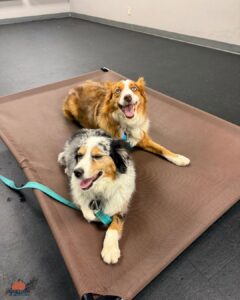
How to Build a Puppy Training Schedule: 7 Daily Habits
A successful routine doesn’t require planning every minute.
Instead, focus on seven essential activities.
1. Start the Morning With a Potty Break
Take your puppy to their designated bathroom area immediately after waking.
Avoid delaying the trip while preparing breakfast or completing other tasks.
Young puppies may need to eliminate shortly after waking.
Use the same appropriate potty area whenever possible.
When your puppy eliminates in the correct location, reward them promptly with praise or a small treat.
The AKC’s puppy potty-training timeline explains how consistent bathroom opportunities after sleeping, meals, and play can support house training.
2. Establish Consistent Mealtimes
Feeding at predictable times can make bathroom habits easier to anticipate.
However, the number of meals your puppy needs depends on age, size, health, and nutritional requirements.
Many young puppies require multiple meals throughout the day.
Follow an appropriate puppy diet and consult your veterinarian about meal frequency and portions.
Provide access to clean drinking water.
After meals, offer another bathroom opportunity rather than assuming your puppy can wait until the next scheduled trip.
3. Include Short Obedience Training Sessions
Puppies generally benefit from brief, engaging lessons rather than long, repetitive sessions.
Start with a few minutes at a time.
Useful early skills include:
- Responding to their name
- Sit
- Come
- Following a food lure
- Gentle handling
- Short leash-walking exercises
- Settling on a designated mat
Reward successful behavior with appropriate treats, praise, or play.
If your puppy becomes distracted or frustrated, end the lesson and try again later.
Focus on making learning enjoyable while gradually developing consistent responses.
4. Schedule Supervised Play
Play provides opportunities for movement, exploration, and interaction.
Suitable activities may include:
- Playing with puppy-safe toys
- Gentle tug games
- Short fetch sessions
- Exploring a secure yard
- Simple food puzzles
- Supervised chewing with appropriate toys
Avoid excessive jumping, repetitive high-impact exercise, and long forced runs while your puppy is growing.
Several short play sessions may be more appropriate than one extended period of intense activity.
Adjust activities to your puppy’s age, health, and energy level.
5. Make Rest a Priority
Puppies need substantial sleep and quiet time.
After active periods, provide a comfortable place to rest.
This might be a puppy-safe pen, bed, or properly introduced crate.
If you’re crate training, build positive associations with the space and avoid using confinement as punishment.
An overtired puppy may become restless, mouthy, or difficult to redirect.
If your puppy becomes increasingly excited despite having enough activity, consider whether they need quiet time.
6. Introduce Safe Socialization
Socialization involves helping puppies become comfortable with people, sounds, environments, and everyday experiences.
It doesn’t mean forcing interactions with every person or dog.
Positive experiences might include:
- Hearing household sounds
- Observing people from a comfortable distance
- Meeting calm, appropriate visitors
- Exploring safe surfaces
- Practicing gentle grooming
- Wearing a collar or harness
- Observing unfamiliar environments without becoming overwhelmed
In Austin, you might introduce your puppy to neighborhood sounds from your porch or carry them during short outings.
For puppies that haven’t completed their vaccinations, consult your veterinarian about appropriate socialization activities.
Avoid potentially contaminated environments and uncontrolled interactions with unfamiliar dogs.
The goal is to provide safe, positive exposure rather than overwhelming your puppy.
7. Establish a Calm Bedtime Routine
A predictable evening routine can help your puppy prepare for sleep.
Try this sequence:
- Provide a calm activity or appropriate chew toy.
- Reduce exciting play.
- Allow your puppy time to settle.
- Take them outside for a final bathroom break.
- Guide them to their sleeping area.
Young puppies may still need overnight potty breaks.
Respond to their needs and adjust the nighttime routine as bladder control develops.
Puppy Training Schedule by Age
Your puppy’s needs will change as they grow.
Use these age ranges as general guidelines rather than strict developmental deadlines.
8–12 Weeks: Establish Basic Habits
During the first few weeks at home, prioritize:
- Frequent potty breaks
- Predictable feeding
- Name recognition
- Positive crate or pen introduction
- Gentle handling
- Short play sessions
- Safe early socialization
- Plenty of rest
Keep training brief and positive.
Don’t expect reliable obedience around major distractions.
3–4 Months: Introduce More Structure
As your puppy becomes familiar with household routines, introduce additional skills.
These may include:
- Sit and Come
- Short leash-walking exercises
- Leave It
- Drop It
- Calm greetings
- Settling in a designated area
Continue providing regular potty opportunities.
Reward appropriate behavior and maintain consistent household expectations.
4–6 Months: Strengthen Familiar Skills
Your puppy may become more curious and easily distracted.
Practice familiar commands in different rooms and gradually introduce mild distractions.
Continue working on leash manners, appropriate play, and calm behavior around visitors.
Avoid assuming that good responses indoors mean your puppy is ready for uncontrolled off-leash situations.
6–12 Months: Maintain Consistency
Adolescent dogs may become more interested in their surroundings.
Previously learned behaviors can become less reliable in exciting situations.
Continue practicing recall, loose-leash walking, basic obedience, impulse control, and calm greetings.
Adjust physical activity to your dog’s development and veterinary guidance.
Consistency remains important throughout adolescence.
How Often Should You Train a Puppy Each Day?
Several short training sessions spread throughout the day can be a practical starting point.
For example:
Morning: Practice name recognition and Sit.
Midday: Practice Come in a quiet room.
Afternoon: Introduce a short leash-walking exercise.
Evening: Reward calm behavior and practice settling.
Training also happens during everyday interactions.
When your puppy responds to their name, chooses an appropriate toy, or waits calmly for attention, reinforce that behavior.
Avoid introducing too many new commands at once.
Focus on a few foundational skills before increasing difficulty.

Common Puppy Training Schedule Mistakes
Following the Clock Too Strictly
Your puppy won’t always need the bathroom at the same time.
Watch for signs they need to go outside and provide additional breaks when necessary.
Scheduling Too Much Activity
Constant stimulation can leave puppies overtired.
Balance play and training with adequate rest.
Expecting Immediate Potty Training Success
Accidents are part of learning.
Clean accidents thoroughly, increase supervision, and adjust bathroom timing.
Avoid punishing your puppy.
Changing Household Rules
If family members respond differently to jumping, chewing, or rough play, learning can become confusing.
Agree on consistent expectations.
Skipping Training During Calm Moments
Quiet periods are often ideal for introducing new skills.
Practice before your puppy becomes highly excited.
Adjusting Your Puppy Schedule for Austin’s Hot Weather
Austin’s warm weather can affect when outdoor activities are comfortable and safe.
During hot periods, avoid strenuous exercise during the hottest parts of the day.
Consider:
- Scheduling outdoor play during cooler morning or evening hours
- Providing shade and fresh drinking water
- Checking pavement temperatures before walks
- Keeping outdoor training sessions brief
- Using indoor enrichment when necessary
- Monitoring your puppy for signs of overheating
The American Veterinary Medical Association’s warm-weather pet safety guide recommends avoiding hot pavement, providing water and shade, and adjusting exercise during warm weather.
Signs of heat stress may include excessive panting, drooling, weakness, unsteadiness, or collapse.
If you suspect heat illness, move your puppy to a cooler area and seek veterinary care immediately.
Your training schedule should always accommodate the weather and your puppy’s health.
When Should You Consider Professional Puppy Training?
Many puppy owners can establish basic routines at home.
However, additional guidance may be useful if you’re struggling with:
- Frequent house-training setbacks
- Persistent puppy biting
- Excessive jumping
- Basic obedience training
- Leash-training challenges
- Fearful behavior
- Inconsistent household manners
Sudden changes in appetite, bathroom habits, energy, or behavior should be discussed with your veterinarian.
Puppy Training Options in Austin, TX
At Off Leash K9 Training Austin and Central Texas, our published training options include an Online Puppy Training Course covering foundational puppy-training topics. Our website also lists obedience training programs. Contact our team to discuss which option is appropriate for your puppy’s age and needs.
Frequently Asked Questions
What is a good daily schedule for a puppy?
A good daily routine includes consistent meals, frequent potty breaks, short training sessions, supervised play, safe socialization, and plenty of rest. Adjust it to your puppy’s age and individual needs.
How many times a day should I train my puppy?
Several brief sessions throughout the day can work well. Start with a few minutes and adjust based on your puppy’s attention span.
Should I potty train my puppy before teaching commands?
Potty training and basic obedience can happen together. Begin house training when your puppy comes home while introducing simple skills through positive, age-appropriate lessons.
How often should a puppy go outside to potty?
Young puppies need frequent bathroom opportunities, especially after waking, eating, drinking, and playing. The exact frequency depends on age and individual development.
How much sleep should a puppy get?
Puppies generally need considerably more sleep than adult dogs. Provide frequent opportunities for uninterrupted rest and consult your veterinarian if you have concerns.
Can I create a puppy schedule if I work full-time?
Yes, but young puppies need care throughout the day. Arrange a trusted caregiver or appropriate care plan if you’ll be away longer than your puppy can comfortably manage.
When should I change my puppy’s daily routine?
Adjust the schedule as your puppy grows and develops better bladder control, attention, and physical stamina. Make changes gradually while maintaining consistent daily habits.
Build a Strong Foundation With a Consistent Puppy Routine
Creating a puppy training schedule doesn’t mean following a rigid timetable.
It means providing predictable opportunities to eat, rest, play, learn, and go potty.
Start with simple habits. Offer frequent bathroom breaks, introduce short obedience lessons, provide appropriate play, and make rest a priority.
As your puppy grows, gradually introduce new challenges while reinforcing familiar skills.
For puppy owners in Austin and Central Texas, a consistent routine can help build better everyday habits.
If you’d like guidance with puppy training, house training, or early obedience, contact Off Leash K9 Training Austin and Central Texas to discuss your puppy’s needs and available training options.
With patience and consistent practice, you can help your puppy develop a stronger foundation for everyday life.
